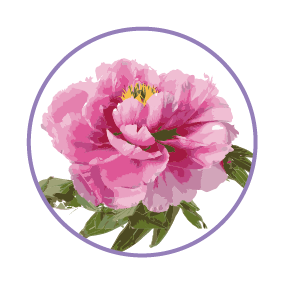
The Chinese name for the species Paeonia delavayi, Dian mu dan, means “tree peony from Yunnan” in south east China. It belongs to the subsection of the Delavayanae, differing from the Vaginatae for its small flowers in colours ranging from yellow to dark red, right down to brown. Even the shrubs have highly characteristic leaves and a distinctive growth pattern. This species also includes those with yellow flowers and orange filaments and with streaked flowers once called P. potanini. It takes its name from the missionary explorer and botanist Père Jean Marie Delavay who discovered it in the regions near Tibet in the 19th century. It grows at altitudes of between 2,000 and 3,600 m in grassy slopes or sparse and virgin pine forests, in rather dry environments. It often produces shoots which means it can be propagated vegetatively.